

All FAQs
California Crane School offers hands-on crane training packages. Our 5-day course comes with additional time in the field and on the cranes as well, which we recommend to anyone new to operating a crane.
OSHA’s Final Rule specifies that operators within the construction industry must be certified. NCCCO is the industry leader in certification for crane operators and is recognized nationwide (some employers only accept NCCCO certification), but aside from that NCCCO Certification is not required.
Yes. California employers are required to ensure that cranes and derricks are inspected at specified intervals and under certain circumstances.
The exact requirements depend on factors such as:
- The type of crane or derrick
- The crane’s rated capacity
- How frequently the equipment is used
- Whether it has recently been assembled, altered, repaired, or relocated
- Whether the crane has been subjected to unusual conditions
- Whether the equipment is a tower crane or another specially regulated type of crane
For full details please see California Crane Inspection & Certification Requirements
The only requirements that must be met to enroll and take the course are set in the NCCCO guidelines:
- Be at least 18 years of age
- Meet all medical requirements
- Comply with NCCCO’s Substance Abuse Policy (https://www.nccco.org/retired-pages/old-certification-policy-redirects/substance-abuse-policy)
- Comply with NCCCO’s Code of Ethics (https://www.nccco.org/retired-pages/old-certification-policy-redirects/code-of-ethics)
Read more on Eligibility for Operating a Crane in California.
California Crane School offers a test preparation course designed to help students pass their National Commission for the Certification of Crane Operators (NCCCO), an accredited certification company.
Yes, when the applicable DOT physical examination requirements satisfy the alternative provided by the California regulation.
Cal/OSHA specifically allows the physical examination requirement to be satisfied using the applicable U.S. DOT physical examination requirements contained in 49 CFR §§391.41 through 391.49, rather than the specified ASME B30.5-2000 criteria.
For more information Crane Operator Physical & Medical Requirements in California.
Yes. You can still attend California Crane School even if you have a DUI on your record. Some employers may require a clean driving record though.
You can call NCCCO Testing Services Department at 727-449-8525 to seek clarification regarding your written exam. California Crane School does not receive information regarding students’ tests other than if they pass or fail.
If your certification has expired—even by a single day—NCCCO requires you to retest as a new candidate. This means you’ll need to take both the written and practical exams again to become certified.
Yes. All your NCCCO mobile crane operator certification exams can being scheduled at the same time with California Crane School.
Written and practical tests can be taken on different days. This depends on the schedule of the class or training school that is conducting the training/testing course.
Yes, but in limited circumstances, including while properly operating as an operator-in-training.
To operate a crane without a certification in California the operator must meet an exemption covered in Cal-OSHA Title 8.
Generally, yes.
The referenced ASME criteria permit adequate hearing to be achieved with or without a hearing aid.
The important consideration is whether the operator can hear adequately to meet the demands of the operation.
Read more about Crane Operator Physical & Medical Requirements in California
Generally, yes.
The ASME vision criteria incorporated into California’s regulations expressly allow the required visual acuity to be achieved with or without corrective lenses.
Wearing glasses or contact lenses is therefore not, by itself, a disqualification.
Read more about Crane Operator Physical & Medical Requirements in California
Yes. We can send an invoice directly to your company to pay for all the fees associated with your course. Please indicate that on any forms when signing up or discuss with our team when you call in at (888) 967-PASS (7277).
That depends on the package you choose. With our 3-day crane operator certification course, you’ll receive a 20-minute familiarization session on each crane before taking your NCCCO practical exams. Additional hands-on training for this course is available for purchase separately.
However, if you enroll in our 5-day Beginner Crane Bundle, you’ll receive 16 hours of field operations, including up to 8 hours of practice time for hands-on experience.
Definition:
“Crane-related experience” – operating, maintaining, inspecting, or training on cranes.
1,000 hours of “Crane-related experience” voids the requirement of the practical exam during recertification. Otherwise the practical exam remains required during recertification.
“Candidates who can attest to at least 1,000 hours of crane-related experience during their period of certification do not need to take the practical exam to recertify.”
Note, 1,000 hours is reduced to 500 hours for Service Truck Cranes.
Reference: CCO MOBILE CRANE OPERATOR CANDIDATE HANDBOOK, p. 1, 10 (“RECERTIFICATION REQUIREMENTS”).
California / Cal-OSHA Title 8
§5006.2. (d)(3) Re-certification. Crane operators shall re-certify every five (5) years and shall be required to meet all of the qualifications set forth in subsection (d)(1). Operators with at least one-thousand (1,000) hours of documented experience operating the specific type of crane for which re-certification is sought as covered by this section during the immediately preceding certification period and who meet the physical examination, substance abuse, and written examination requirements set forth in subsection (g)(1)-(g)(3) shall not be required to take the “hands-on” examination specified in subsection (g)(4) to re-certify.
3 specifics are highlighted in Title 8 here, which are:
- 1,000 documented hours of experience
- Operating
- The specific type of crane
For more information please read ‘Eligibility for Operating a Crane in California‘.
A CDL is not required to operate a crane. Although, a CDL may be required by your current or future employer to drive cranes on public roads or highways.
Read more on Eligibility for Operating a Crane in California.
No. You do not need to prove any level of education to take the course or become certified.
NCCCO guidelines state the following requirements:
- Be at least 18 years of age
- Meet all medical requirements
- Comply with NCCCO’s Substance Abuse Policy (https://www.nccco.org/retired-pages/old-certification-policy-redirects/substance-abuse-policy)
- Comply with NCCCO’s Code of Ethics (https://www.nccco.org/retired-pages/old-certification-policy-redirects/code-of-ethics)
Read more on Eligibility for Operating a Crane in California.
No. You do not need a driver’s license to attend California Crane School’s crane operator certification courses. Your employer may require this though.
You need a crane operator certification for each crane type (not capacity) you are operating according to the OSHA Final Rule 1926 subpart CC.
Please reserve a spot in our course to ensure there is availability. Complete our short enrollment application and submit a non-refundable deposit to complete the process and book your seat. To get started please call us at (888) 967-PASS (7277).
California Crane School pioneered the intensive 3-day crane operator certification course. With experience from hundreds of classes, we know exactly how much time is needed to prepare students for both the written and practical exams. Courses that are shorter often don’t provide enough instruction to ensure success, while longer ones tend to fill time with personal stories and off-topic discussions. While sharing experiences can be interesting, our focus is on getting you certified efficiently and effectively. Plus, we back our program with a guarantee: if you don’t pass the written tests after completing our class, you can retake the course with us at no additional cost.
Yes. All 50 states recognize the NCCCO crane operator certification.
We currently do not accept work vouchers.
We do not currently offer grants. Please see section on financing here.
We currently do not accept the GI Bill. We do provide a $100 military discount. The NCCCO also offers a certification fee reimbursement through the GI Bill.
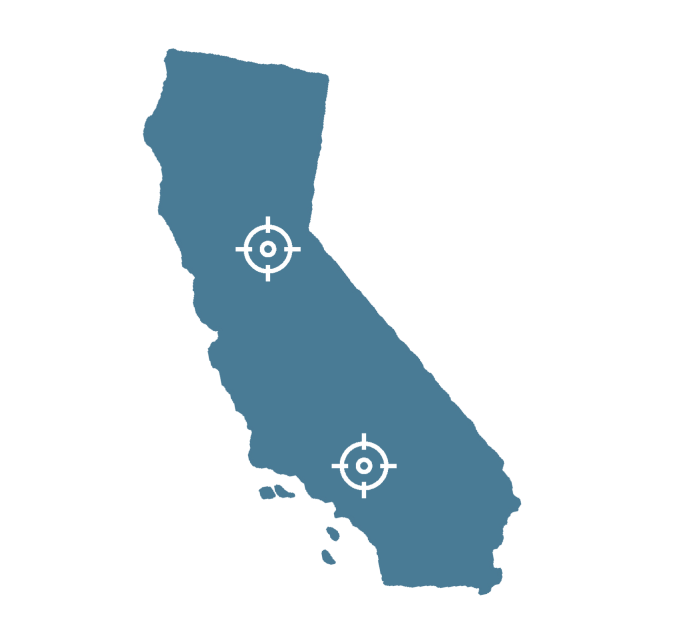
Yes. We have more than enough cranes at every practical testing site location, which are located in Sacramento & Los Angeles, California.
We currently do not offer any crane operator certification in Spanish.
California Crane School offers discounts on crane operator training courses year-round. To see what discounts you may be eligible for, give us a call at 888-967-7277.
We offer payment installments through Affirm or our in-house financing option. View Financing Here.
Affirm
Buy now, pay over time. Monthly payments with no late fees.
- No credit impact to apply
- Flexible payment options
- No fees, gotchas, no surprises
Subject to eligibility. See lending terms at affirm.com/disclosures.
In-house Financing
Students can make a $500 non-refundable deposit upon sign up and the remaining balance can be paid in installments, however the balance must be paid off two weeks prior to the first day of class.
View Terms & Conditions.
For more information, please call our office at 888-967-7277.
Sometimes – but not every inspection.
Being a certified crane operator does not automatically qualify someone to perform every inspection, examination, test, or certification required by California law. They still do play a role in inspecting the equipment and identifying unsafe conditions.
Review more details in California Crane Inspection & Certification Requirements
Not necessarily.
Crane operation is safety-sensitive work, so certain medical conditions can require additional evaluation. However, the existence of a medical condition should not automatically be treated as a blanket disqualification unless the applicable standard requires it.
The ASME framework referenced by California recognizes that specialized clinical or medical judgment may sometimes be appropriate when an individual does not meet a particular qualification but the condition may not affect safe crane operation.
Individual medical qualification questions should therefore be evaluated by a qualified healthcare professional.
For more information Crane Operator Physical & Medical Requirements in California.
For candidates who pay their own fees (not covered by an employer), we’re often able to refer them to companies that reach out to us seeking certified operators—something we’ve successfully done for many past students.
Yes, for crane operators covered by California’s crane operator certification requirements.
Cal/OSHA Title 8 §5006.1 applies to covered mobile and tower cranes in general industry, while §5006.2 establishes operator training, certification, and evaluation requirements for covered cranes and derricks used in construction.
Under both regulations, a certificate of competency may be issued only after the operator meets several requirements, including passing a physical examination.
For more information read Crane Operator Physical & Medical Requirements in California
Not necessarily.
California’s crane regulations contain important exceptions and different requirements depending upon the equipment and type of work being performed.
For example, §5006.1 contains exceptions (read more on crane operator exemptions in California) for certain smaller mobile cranes, qualifying electric line trucks and marine terminal operations. Section 5006.2 also contains exceptions for certain equipment used in construction, including equipment based upon crane type, capacity and how it is being used.
For more information Crane Operator Physical & Medical Requirements in California.
Federal OSHA’s construction crane rules under 29 CFR 1926 Subpart CC require covered crane operators to be properly trained, certified or licensed, and evaluated by their employer.
For more information Crane Operator Physical & Medical Requirements in California.
Private crane operator NCCCO certification courses are available nationwide. Please fill out the following form or call our enrollment specialists at 888-967-7277 to get started!
To obtain a CCO ID number you will need to (1) Register on NCCCO.org, (2) Provide the 9 digit ID number in your NCCCO account (not the same as a CCO ID) to California Crane School (CCS). CCS will use this number when setting up your written and practical exams.
After you pass the exams you will receive your certification card with your official certification number!
If you have any questions too please contact us at (888) 967-PASS (7277).
If the crane operator has 1,000 or more ‘crane-related experience’ hours within that period they must only pass the written exam. If they have not had that amount of experience within the 5 year period they must take both the written and the practical exam again.
Related FAQ:
- What counts as ‘crane related experience’?
- View more details regarding the written exam and practical exam.
The written exams can be a bit challenging. Our team is so confident in our pass rates that we guarantee you will or the next class with us is FREE!
California Crane School offers the fastest route to earning your crane operator certification. Our expert training team has helped thousands of operators successfully achieve their NCCCO certification—boasting some of the highest pass rates in the nation. We even guarantee you’ll pass your written exams, or you can retake the next available class with us for FREE until you do.
The crane operator certification is good for 5 years from the date the candidate passes their exams (written & practical). It is important to note that recertification must occur prior to the certification expiration date. Recertification extends the duration for another 5 years.
After successfully passing the NCCCO’s written and practical exams you will receive your crane certification license. This is valid for 5 years and each crane operator must recertify prior to the 5 year period ending. If the crane operator has 1,000 or more ‘crane related’ hours of experience within that period they must only pass the written exam. If they have not had that amount of experience within the 5 year period they must take both the written and the practical exam again.
Short summary:
- How long does crane certification last? 5 years.
- When do you need to renew your crane certification? Before the 5 year period has ended.
There are a total of 142 questions placed in 3 categories.
Section 1 – Crane Operator Certification Core Test (90 questions, 90 minutes)
Section 2 – Telescopic Boom Cranes – Swing Cab (TLL) Specialty Exam (26 questions, 60 minutes)
Section 3 – Telescopic Boom Cranes – Fixed Cab (TSS) Specialty Exam (26 questions, 60 minutes)
For more details regarding the test please view our NCCCO Written Exam page.
According to the Bureau of Labor Statistics (2023), a crane operator in California makes a median of $32.14 an hour.
Currently (2025) in California the median hourly wage is $38.25 and the annual median wage is $79,570. The high earning wage goes up to $135,820 and the lower earning wages are at $50,550. You can view more statistics of the growth of wages over the years and earnings by city in our 2026 report ‘California Crane Operator Salary.’
Classes are conducted every month for each of our locations in Northern & Southern California. We also offer private courses nationwide.
Our classes happen once a month in two locations: Ontario, California and Sacramento, California. We also conduct many private classes throughout the month. For information on private classes call California Crane School at (888) 967-PASS (7277).
California crane operators covered by these certification requirements must recertify every five years.
An operator who has at least 1,000 hours of documented experience operating the specific type of covered crane during the immediately preceding certification period may not have to repeat the hands-on examination during recertification, provided the operator meets the applicable physical examination, substance abuse and written examination requirements.
In other words, sufficient experience may eliminate the need for another practical examination during recertification, but it does not eliminate the physical examination requirement.
For more information Crane Operator Physical & Medical Requirements in California.
California Crane School offers a 3-day and 5-day class where students will get the opportunity to earn their NCCCO crane operator certification. After you have received your certification, you can begin logging in your hours with your employer. After you have enough time of supervised and logged hours you can become a qualified crane operator.
Please contact us as soon as possible so we can help you reschedule your course. Please keep in mind that NCCCO requires that we send them an excuse letter explaining the emergency to eliminate any rescheduling fees. Call (888) 967-7277.
Yes, we can help you get certified—even if you’ve never operated a crane before. In fact, sometimes candidates with no prior experience perform better on the written exams because they haven’t developed habits that conflict with the “by-the-book” methods used in certification testing.
While we can’t turn someone into an expert crane operator in just three days, we can help you earn your certification. If you can add, subtract, and understand English, we can prepare you to pass the written exams on your first try. We’ve also helped hundreds of English-as-a-second-language (ESL) candidates pass successfully.
For the practical exam, if you can control the load and prevent the hook from swinging—with a few pointers—you can likely pass. If you need hands-on practice, we offer crane time with an instructor for $150 per hour. Most beginners can pass the practical test with less than two hours of instruction.
Keep in mind, our program is not a substitute for years of field experience or a formal apprenticeship. Our goal is to help you meet the certification requirements and get that card in your pocket. We don’t set the standards—we just provide the most effective path to certification.
No. For example, if a candidate fails one specialty written exam, the NCCCO charges a $80 retesting fee. If additional specialty exams are failed, each retest costs $80 (swing or fixed). Failing the core exam results in a $140 retesting fee. California Crane School does not charge candidates to return and attend class again or to sit in on a written exam retake. However, if a candidate fails a practical exam, there is a $395 retesting fee (per exam, swing or fixed), which includes the testing company’s (IAI) charges.
An inspection generally involves examining the crane and its components for defects, excessive wear, damage, improper operation, or other unsafe conditions.
A certification is a formal determination made under California’s certification requirements that the crane has been examined and tested as required and is certified for use.
For more, see California Crane Inspection & Certification Requirements
Yes, for operators subject to California’s certification requirements.
In addition to the physical examination, Cal/OSHA requires operators to pass a substance abuse test.
For more information Crane Operator Physical & Medical Requirements in California.
This article will cover:
- Who Can Perform the Crane Operator Physical?
- Can a DOT Physical Be Used?
- Is the California Crane Physical an NCCCO/CCO Requirement?
- Does Federal OSHA Require a Crane Operator Physical?
- What Is ASME B30.5?
- How Often Is a Physical Examination Required?
- Does Every Crane Operator in California Fall Under These Requirements?
- Does a Medical Condition Automatically Prevent Someone From Becoming a Crane Operator?
Yes. Labor unions around the country offer the NCCCO certification program and it is by far the most popular. Over 90% of crane operators are certified by the NCCCO.
Crane operator certification is required to operate a crane in California.
View California Crane Operator Laws and California Crane Regulations: Understanding Cal-OSHA Title 8 Unique Requirements.
Also see California Crane Operator Exemptions.
The NCCCO written and practical exams are designed to assess your knowledge, skills, and abilities as a crane operator. Fortunately, our training team has helped thousands of candidates earn their NCCCO certification—consistently achieving some of the highest pass rates in the nation. The results speak for themselves. And the best part? We guarantee you’ll pass the NCCCO written exams, or you can retake our class for free until you do!
California’s medical examination requirement comes from California law — not simply from holding a CCO certification.
Current CCO Mobile Crane Operator eligibility requirements include:
- Being at least 18 years old
- Compliance with CCO’s Substance Abuse Policy
- Compliance with CCO’s Code of Ethics
- Passing the required written examination(s)
- Passing the required practical examination(s)
For more information Crane Operator Physical & Medical Requirements in California.
All signups are done online and over the phone. Please select the red “Sign Up” button at the top of your screen or call us at (888) 967-PASS (7277).
From application to certification, we are with you every step of the way!
Because most practical exams mandate that crane boom lengths be configured between 70% and 75% of their maximum extension, we use the smallest cranes that still meet these criteria. This approach simplifies the testing process for candidates. All our cranes are Cal-OSHA certified and dedicated exclusively to practical exam use.
We currently utilize mini crawler cranes for swing cab exams and carry decks for fixed cab exams, which are selected to make examinations easier for students. The shortest allowed booms make for easier practical exams.
All candidates must bring and wear a hardhat and work boots to the practical yard site. Everything in the classroom (work materials) is provided as well as study guides and load charts.
Mobile cranes are commonly used in construction, but are also used in other industries like tree services, oil & drilling, utilities, and other crane services.
In the CCO Mobile Crane Operator Candidate Handbook (p. 1 and 10 under “Recertification Requirements”) it states that “Candidates who can attest to at least 1,000 hours of crane-related experience during their period of certification do not need to take the practical exam to recertify.” This “crane-related experience” is defined as “operating, maintaining, inspecting or training on cranes.”
The American Society of Mechanical Engineers (ASME) B30.5 standard addresses safety requirements for mobile and locomotive cranes.
ASME B30.5-2000, Chapter 5-3.1.2(a)(1-5, 7, 8).
ASME B30.5 has been revised many times since 2000, and newer editions contain updated requirements. However, when determining what California’s §§5006.1 and 5006.2 require, operators and employers should look to the specific edition and provisions incorporated by California, rather than assuming the newest ASME edition automatically replaces the edition named in the regulation.
For more information Crane Operator Physical & Medical Requirements in California.
The ASME criteria incorporated by California also address physical (i.e. Seizures or Loss of Physical Control) or emotional conditions that could interfere with safe crane operation.
For more details see Crane Operator Physical & Medical Requirements in California
California specifically incorporates portions of ASME B30.5-2000 into its crane operator certification regulations.
The criteria generally evaluate the following:
- Vision
- Ability to Distinguish Colors
- Hearing
- Strength, Endurance & Agility
- Depth Perception, Field of Vision and Coordination
For more details see Crane Operator Physical & Medical Requirements in California
There is no universal federal OSHA “crane operator physical card.”
Federal OSHA primarily requires certification, training, and employer evaluation.
Federal OSHA does not currently impose a specific nationwide physical examination standard for crane operators. OSHA’s crane rules under 29 CFR 1926 Subpart CC require covered construction crane operators to be trained, certified or licensed, and evaluated by their employer, but §1926.1427 does not establish specific vision, hearing, blood-pressure, or other medical thresholds. OSHA has historically stated that there is no federal OSHA requirement for a crane-operator medical examination, although an operator must still be capable of operating the crane safely.
Cal/OSHA expressly requires operators of covered mobile and tower cranes to pass a physical examination as part of crane operator certification. This applies under both California’s general-industry crane rule, §5006.1, and its construction crane rule, §5006.2. The examination must be performed by a physician or other licensed healthcare professional and must, at minimum, satisfy either specified ASME B30.5-2000 physical criteria or the applicable U.S. Department of Transportation medical qualification requirements in 49 CFR §§391.41 – 391.49.
View Comprehensive List of all physical & medical requirements for crane operators in California.
Written exams require 70% or higher to pass.
California Crane School follows the NCCCO eligibility requirements, which include:
- Be at least 18 years of age
- Meet all medical requirements
- Comply with NCCCO’s Substance Abuse Policy (https://www.nccco.org/retired-pages/old-certification-policy-redirects/substance-abuse-policy)
- Comply with NCCCO’s Code of Ethics (https://www.nccco.org/retired-pages/old-certification-policy-redirects/code-of-ethics)
Read more on Eligibility for Operating a Crane in California.
The median annual salary for a crane operator in California is over $68,000 a year with the highest overall reaching near $100,000 a year. View more about on the Bureau of Labor Statistics (2023).
The testing company usually takes 2 to 3 weeks to deliver written test results and approximately 3 to 5 weeks for practical test results. If you haven’t received your results within that timeframe, please contact the International Assessment Institute (IAI) at (727) 449-8525.
You will generally receive your certification card in the mail within 3-5 weeks from the date you passed your written and practical exams. The MyCCO App can be downloaded as well to receive digital information quicker.
To avoid additional fees, candidates must register for the written exams at least two weeks ahead of time. If registration is submitted late, the testing provider—International Assessment Institute (IAI)—will apply a $50 late fee (note: California Crane School does not receive any portion of this fee). Furthermore, anyone not registered at least one week prior will be ineligible to sit for the written exam. Those interested in taking only the practical exam can contact California Crane School directly at (888) 967-PASS (7277) to schedule it at their convenience. All necessary certification paperwork, including the candidate’s photo, is completed on site.
You should familiarize with all of the crane hand signals but the ones that will be the most important for the practical exam are:
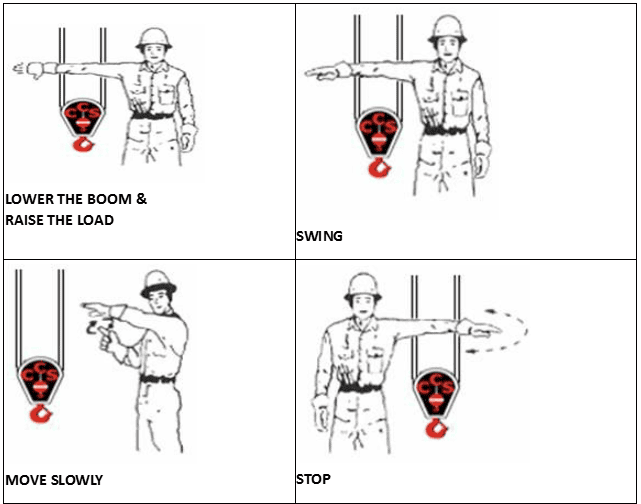
Where certification is required, the annual tests and examinations generally must be performed by a certificating agency currently licensed by the California Division of Occupational Safety and Health (Cal/OSHA), or by a properly authorized designee of that agency.
For more information see California Crane Inspection & Certification Requirements
The regulations state that the physical examination may be conducted by a physician or other licensed healthcare professional, giving examples such as:
- Physician
- Physician assistant
- Nurse practitioner
For more information please see Crane Operator Physical & Medical Requirements in California
‘Qualified person’ means a person who, by possession of a recognized degree, certificate, or professional standing, or who by extensive knowledge, training and experience, successfully demonstrated the ability to solve/resolve problems relating to the subject matter, the work, or the project.
Read more on Eligibility for Operating a Crane in California.
Those operating cranes that meet Cal-OSHA’s Title 8 specifications or fall under the limited ‘operator-in-training’ category. To ensure that the exemptions are followed correctly you must review §5006, §5006.1 and §5006.2 of Cal-OSHA Title 8.
According to the OSHA Final Rule “1926.1427(c)(3): No cost to employees. Whenever operator certification/licensure is required under this section, the employer must provide the certification/licensure at no cost to employees.” In summary, the employer is responsible. Often crane operators choose to pay for their own certification, which can be seen as a display of initiative and reduces the cost to employers when hiring a new employee.
Landing a crane job without certification is extremely difficult. While the cost of obtaining a crane operator certification (such as a CCO card) is often criticized—primarily due to its price—employers see it as a crucial requirement. Imagine you’re the employer: would you spend thousands certifying a new hire who might leave shortly after for slightly higher pay elsewhere? Most companies prefer to onboard candidates who already hold valid certifications, as it reduces financial risk and ensures they’re job-ready. Holding a certification signals to potential employers that you’re serious, qualified, and ready to start working immediately—making you a much more attractive hire.
Ready to Enroll? Give us a Ring!
Get NCCCO Certified Now
Contact Us Today!

 Industry Expert 20+ Years
 Dedicated Support & Training Team
 Classes Every Month of the Year
Eady to Get Certified
Contact Us Today!
Industry Pioneer 20+ Years
Dedicated Team of Professionals
Classes Monthly & Year-Round

Check out the great things our customers are saying about us


